- Home
- Products ...
- Work Gloves
- Cut Resistant Gloves
Cut Resistant Gloves
Cut-resistant gloves certified to EN 388 with cut levels from B to F, in various knit gauges and coatings, for sheet metal, glass, recycling, construction and food processing.
64 modelli
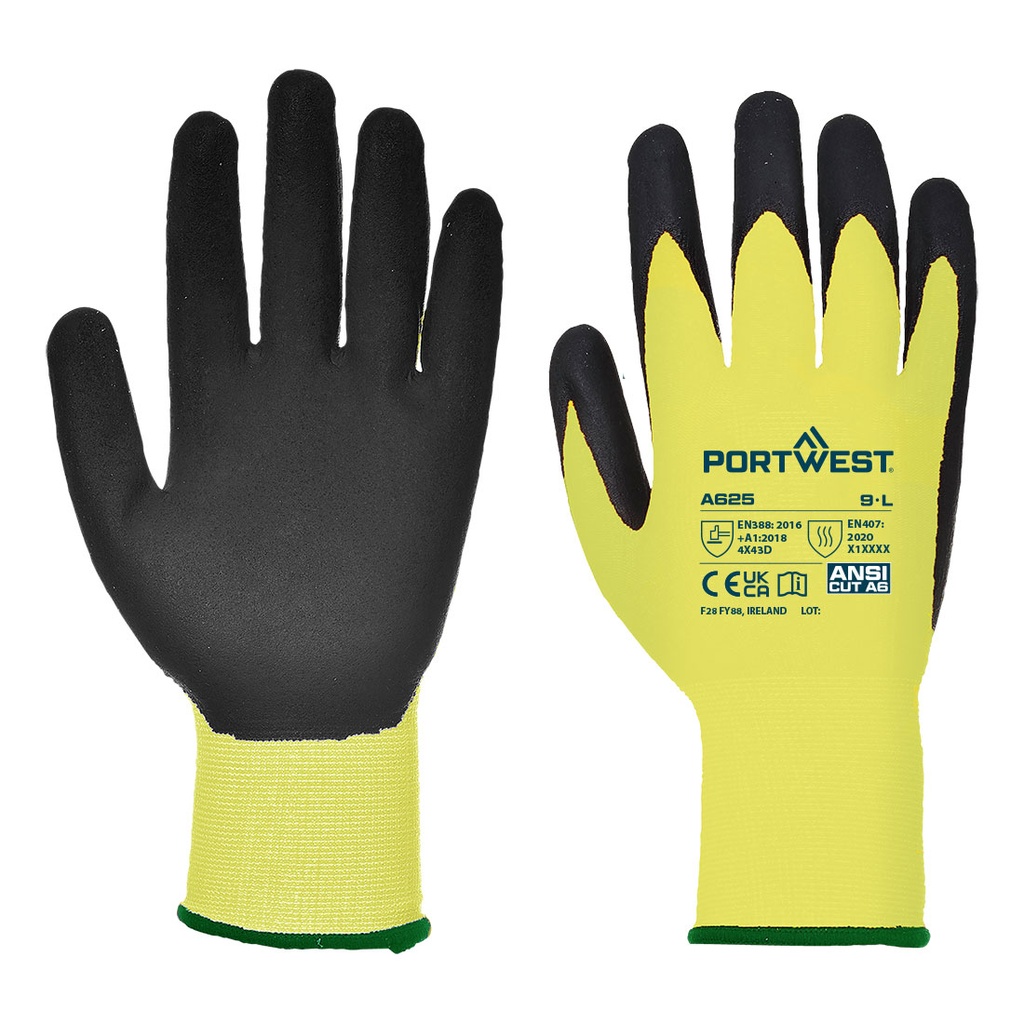
Cut B13 PU Glove
Cut D13 3/4 Nitrile Foam Glove
Cut C13 PU Glove
Cut D13 PU Viz-Tex Glove
Cut D13 Nitrile Viz-Tex Glove
Cut D13 Leather Palm Glove
Cut D13 Nitrile Green Long Cuff Glove
Cut B13 PU Economy Glove
CS Cut C18 Nitrile Glove
CS Cut C18 PU Glove
CS Cut C15 PU Glove
Cut D13 PVC Dot Glove
CS Cut D18 PU Glove
Cut B13 Nitrile Amber Glove
CS Cut D15 Nitrile Glove
Cut D13 Nitrile Green Glove
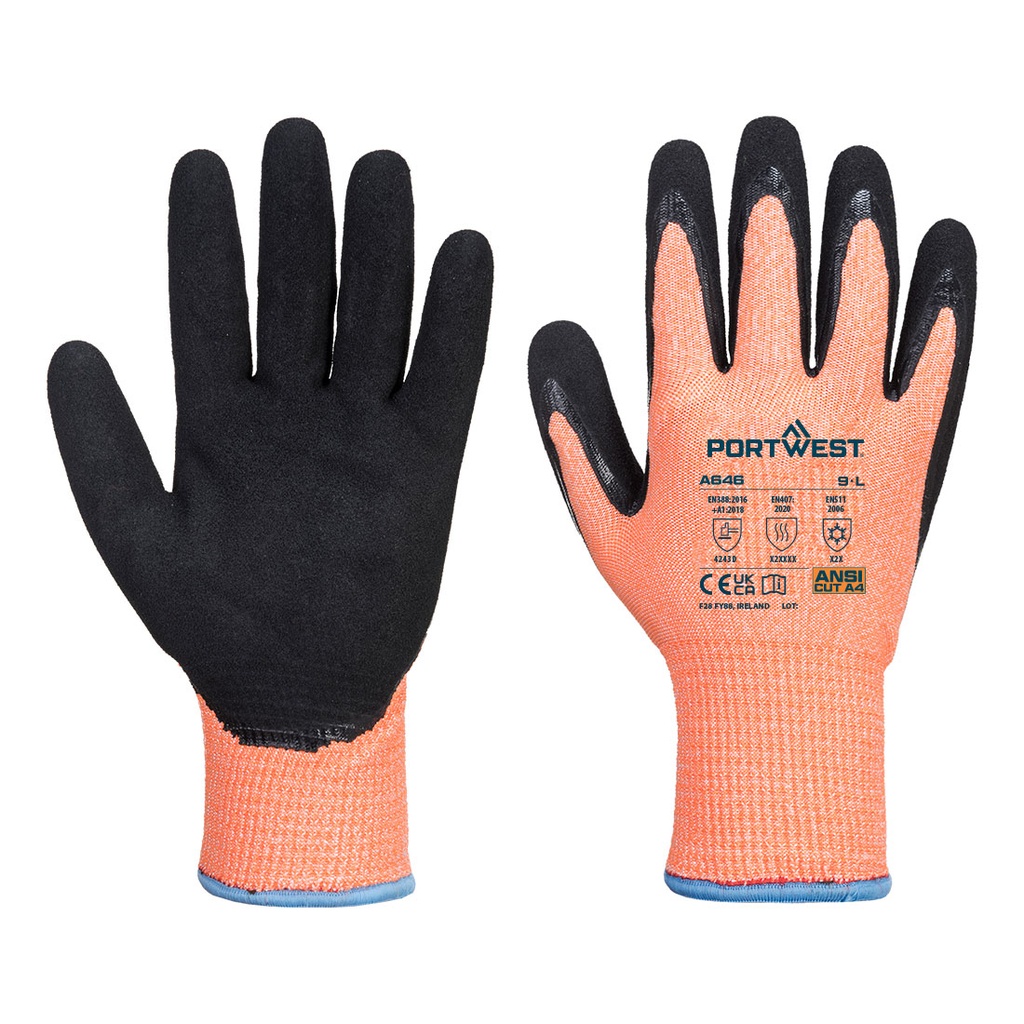
Cold D13 Nitrile Viz-Tex Cut Glove
CS Cut D15 PU Glove
CS Cut D21 Nitrile Glove
CS Cut D21 PU Glove
Cut-resistant gloves: choosing the right EN 388 level
A cut-resistant glove that is too light leaves workers exposed to risk, while one that is too heavy reduces dexterity and encourages people to take it off. The choice starts from the material being handled and how often there is contact with sharp edges.
ISO cut levels from A to F
In the EN 388 marking, the letter indicates the force needed to cut the glove with a moving blade: from at least 2 newtons for level A up to at least 30 newtons for level F. In this category you will find models from level B, for assembly and small components, to levels C and D, for sheet metal and profiles in construction and joinery, up to levels E and F for very sharp sheet metal, flat glass and recycling plants. Some models are also suitable for food contact or certified to EN 407 for contact heat; one item carries EN 1082-1, specific to gloves protecting against cuts and stabs from hand knives.
Knit gauge and coating
- 13: thicker, tough knit for heavy work.
- 15, 18 and 21: progressively finer knit, greater sensitivity and comfort for long shifts.
- PU for precision, nitrile foam for oily surfaces, sandy nitrile for grip on greasy parts.
Equipping the team
Many models are available in packs of 12 pairs and, for high consumption, in larger packs too. If impacts on the back of the hand add to the cut risk, see impact gloves; for work without sharp edges, general handling glovesare enough. All models are in the work glovescategory.
Domande frequenti
Which cut level is needed for handling sheet metal?
For sheet metal and profiles with sharp edges you generally start from levels C or D; for very sharp thin sheet or flat glass you move up to levels E or F. The final choice should be based on the risk assessment.
Why do some gloves have an X instead of the second EN 388 number?
The X indicates that the rotating blade cut test is not applicable, because cut-resistant fibres blunt the blade and distort the result. In that case the reference value is the ISO cut letter.
What do the numbers 13, 15 or 18 in the glove name mean?
They indicate the knit gauge: the higher the number, the thinner and more sensitive the glove. 13-gauge gloves are tougher, 18 or 21-gauge ones better suited to precision work.
How can I tell whether a size is available immediately?
Every product page shows stock by size in our Milan warehouse and in the European warehouse. Items in stock in Milan ship within 24/48 working hours.