- Home
- Products ...
- Work Gloves
- Chemical Gloves
Chemical Gloves
Chemical protection gloves in nitrile, PVC, latex, neoprene and butyl, certified to EN ISO 374, in lengths from 27 to 60 cm for detergents, oils, solvents and plant protection products.
17 modelli
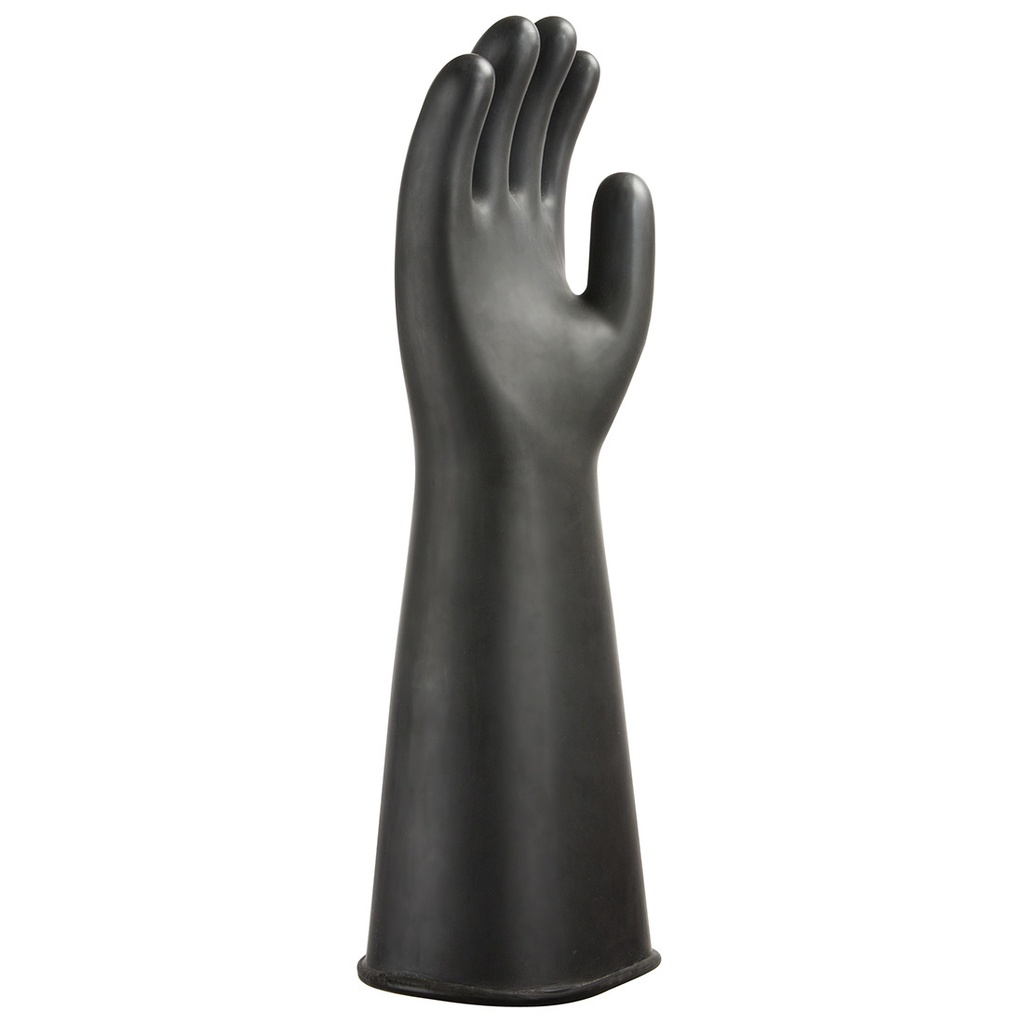
Chem 440 Latex Heavyweight Gauntlet
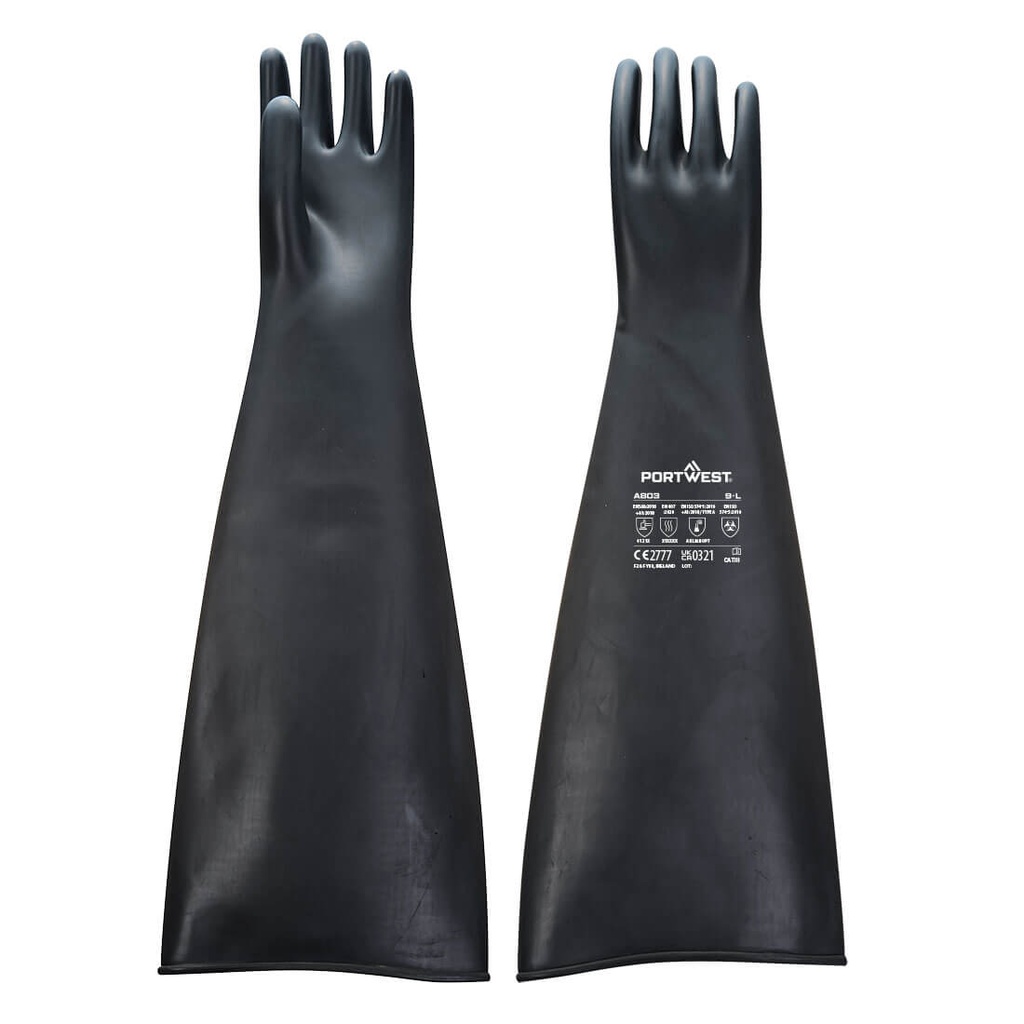
Chem 600 Latex Heavyweight Gauntlet
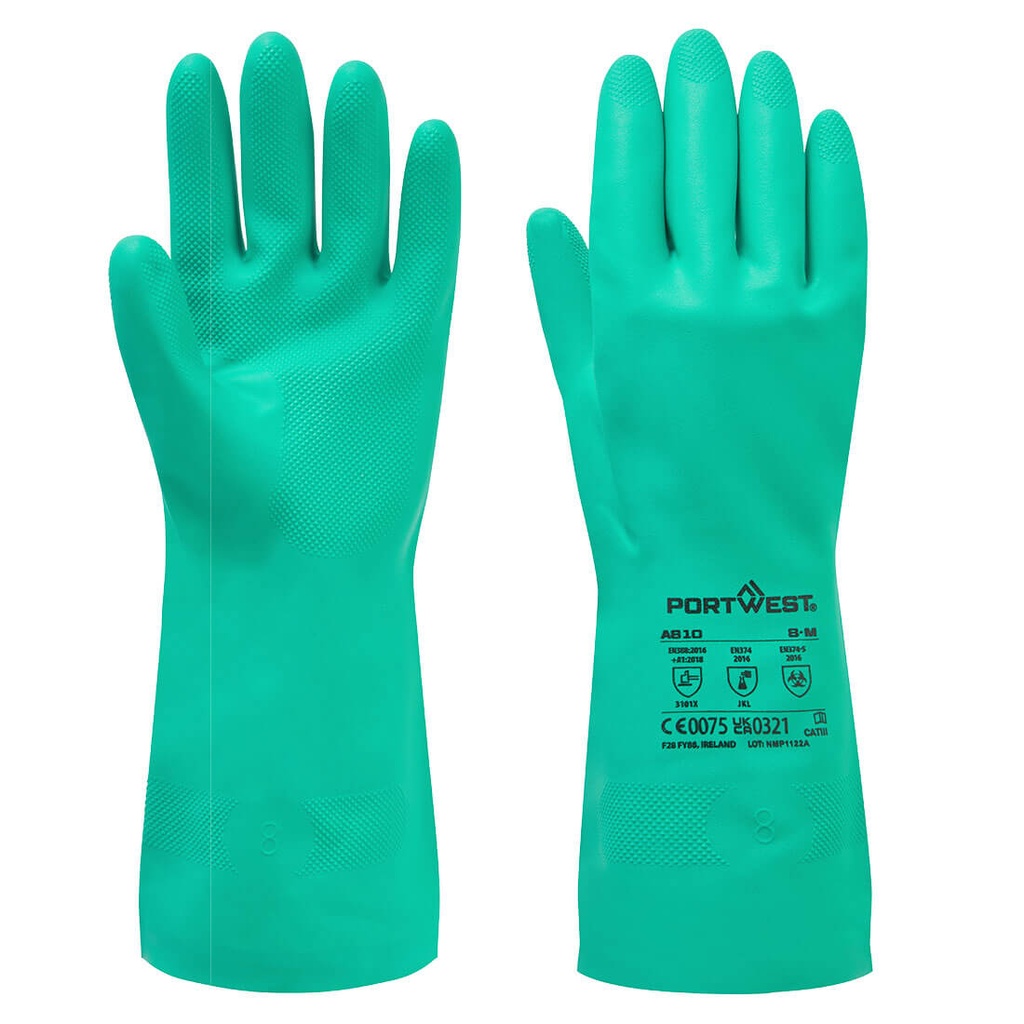
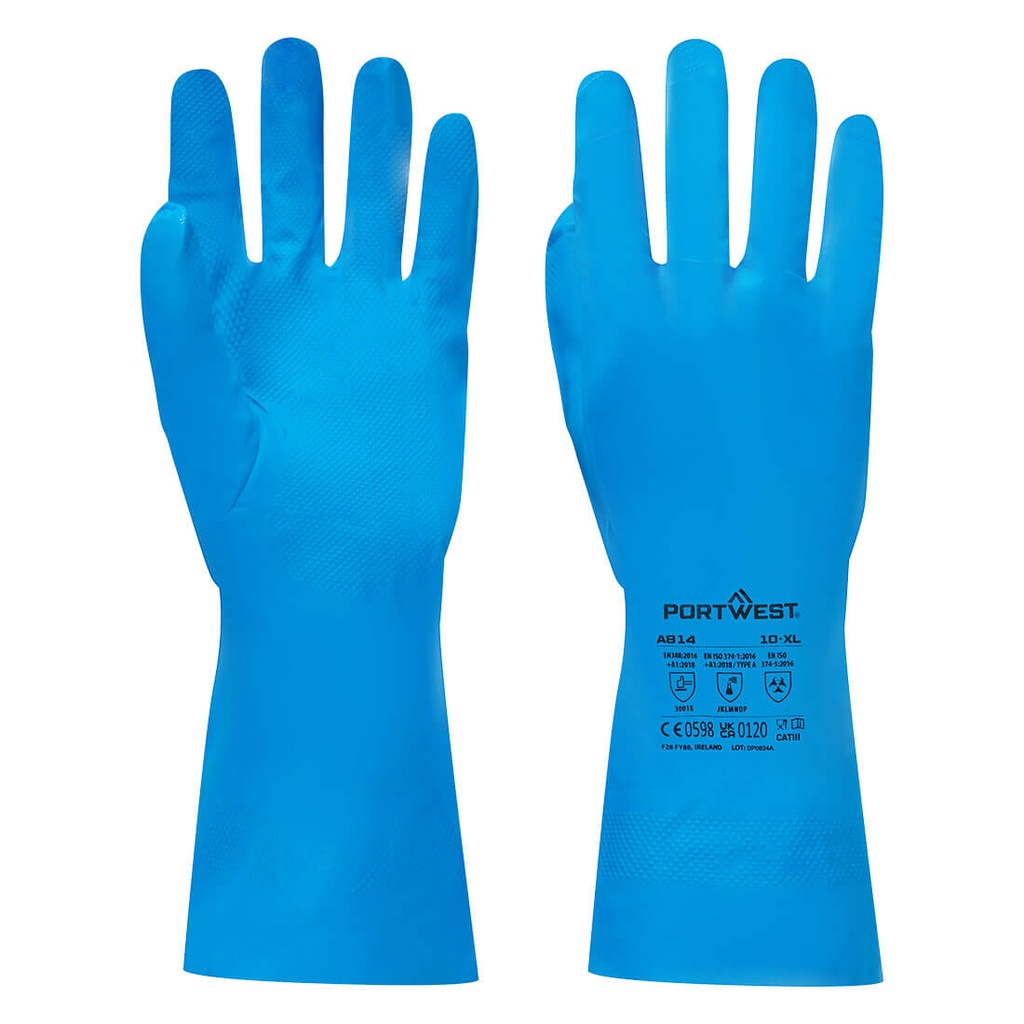
Chem 320 Nitrile Gauntlet
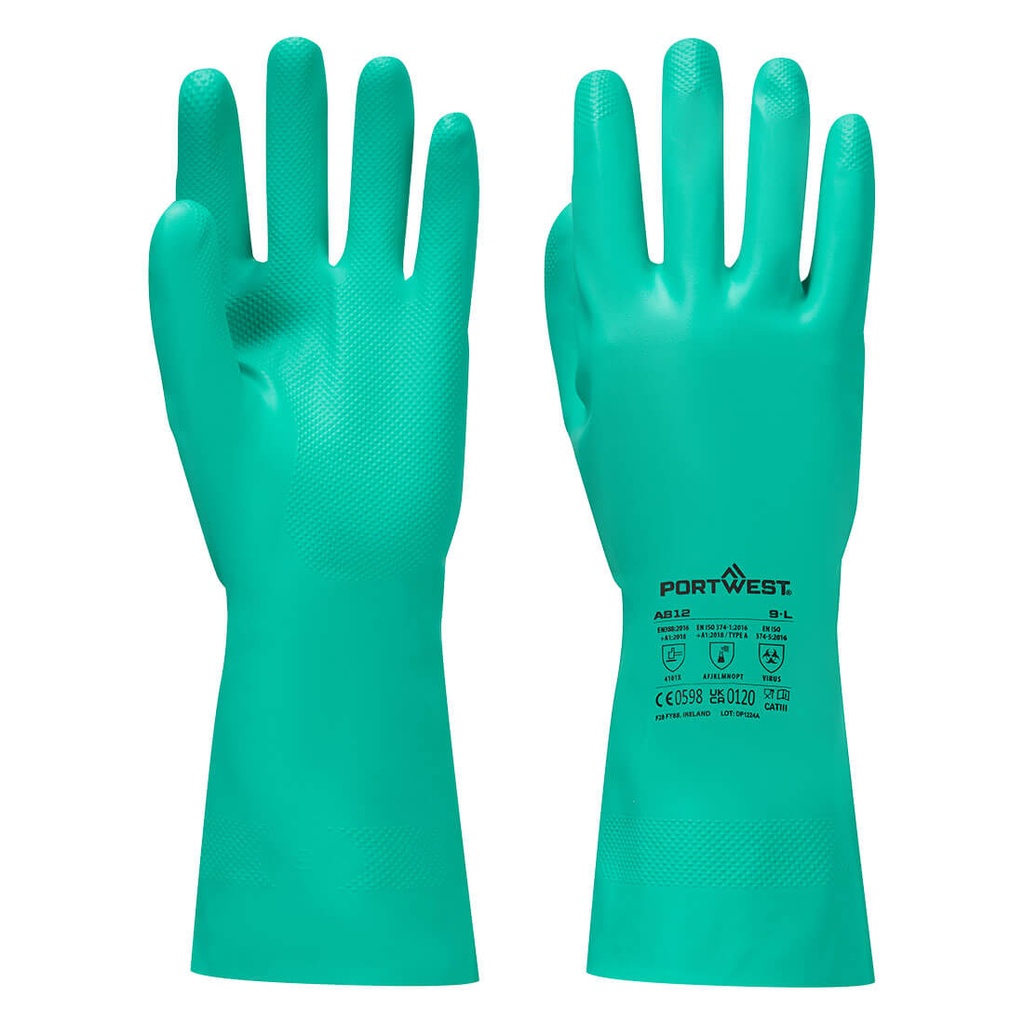
Chem 330 Nitrile Plus Gauntlet
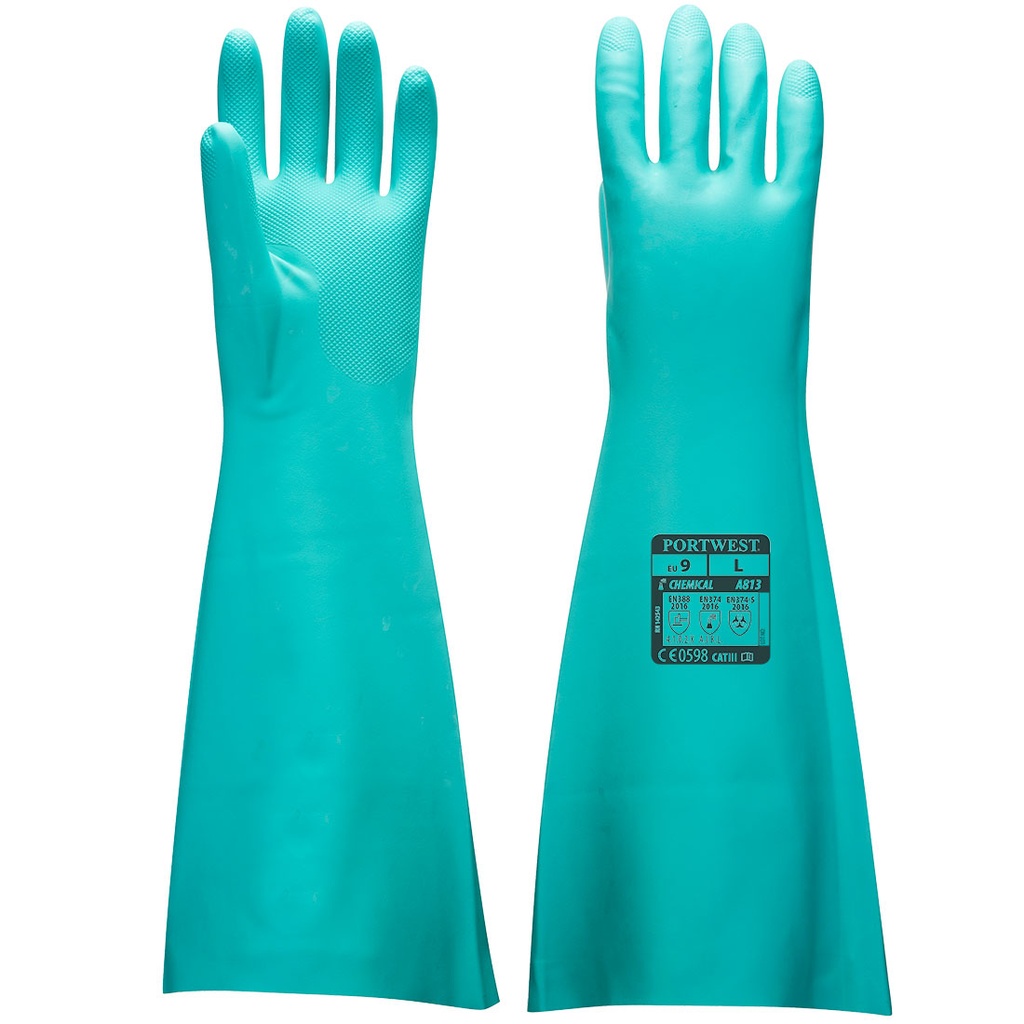
Chem 460 Nitrile Extended Gauntlet
Chem 330 Nitrile Food Gauntlet
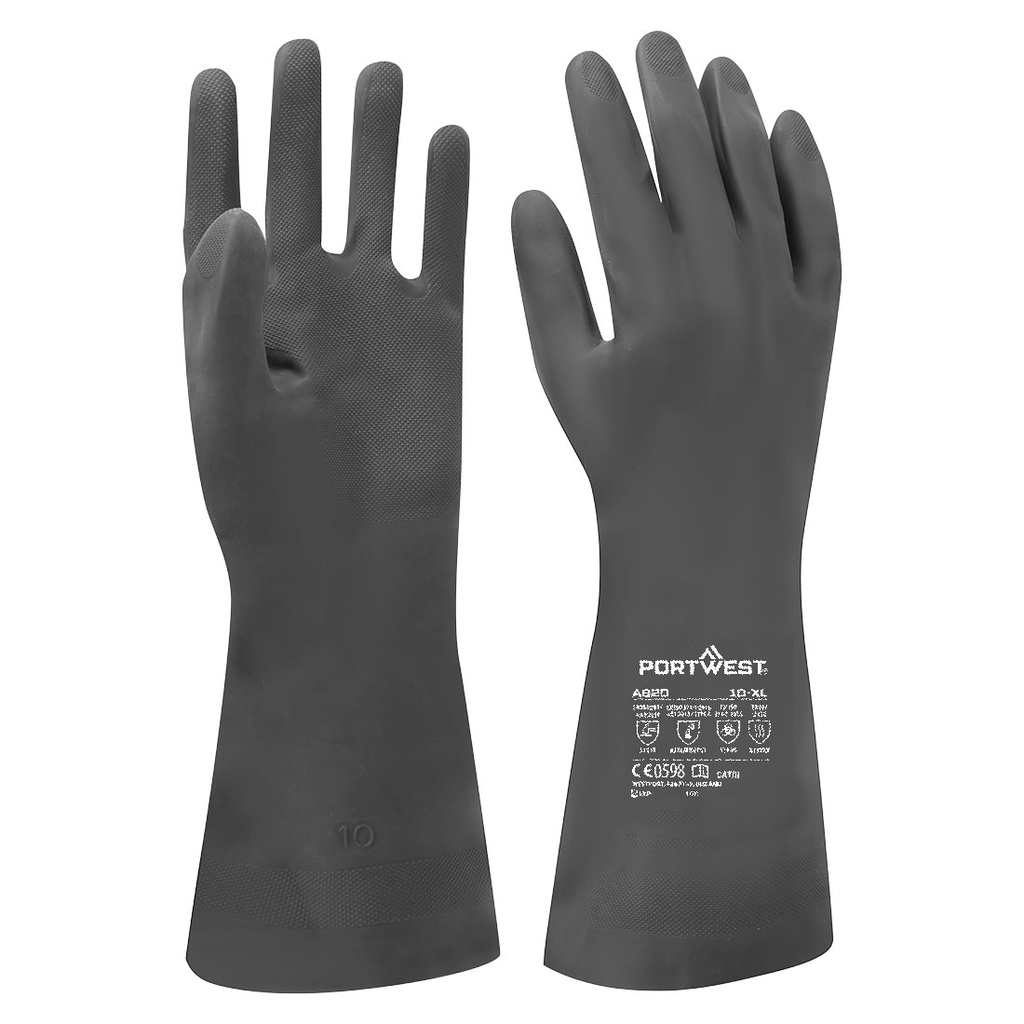
Chem 380 Neoprene Gauntlet
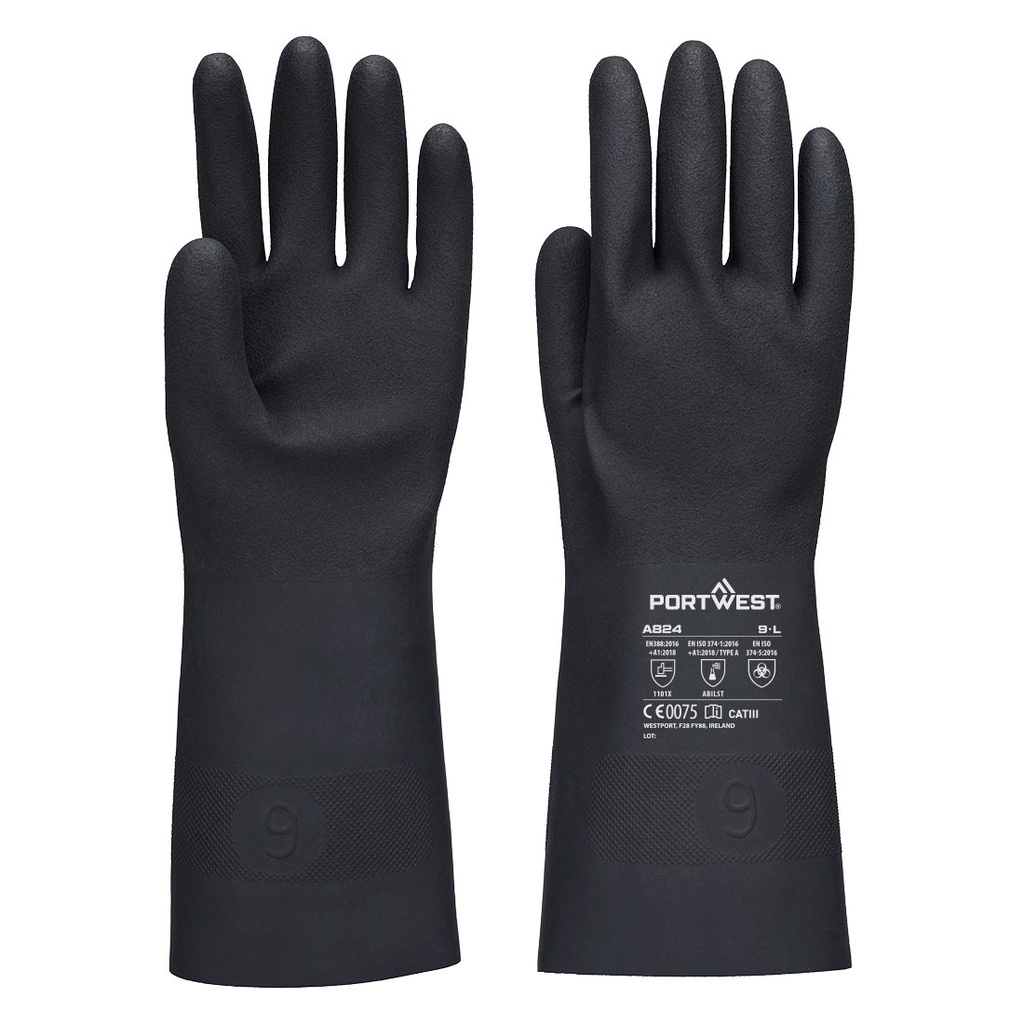
Chem 350 Butyl Gauntlet
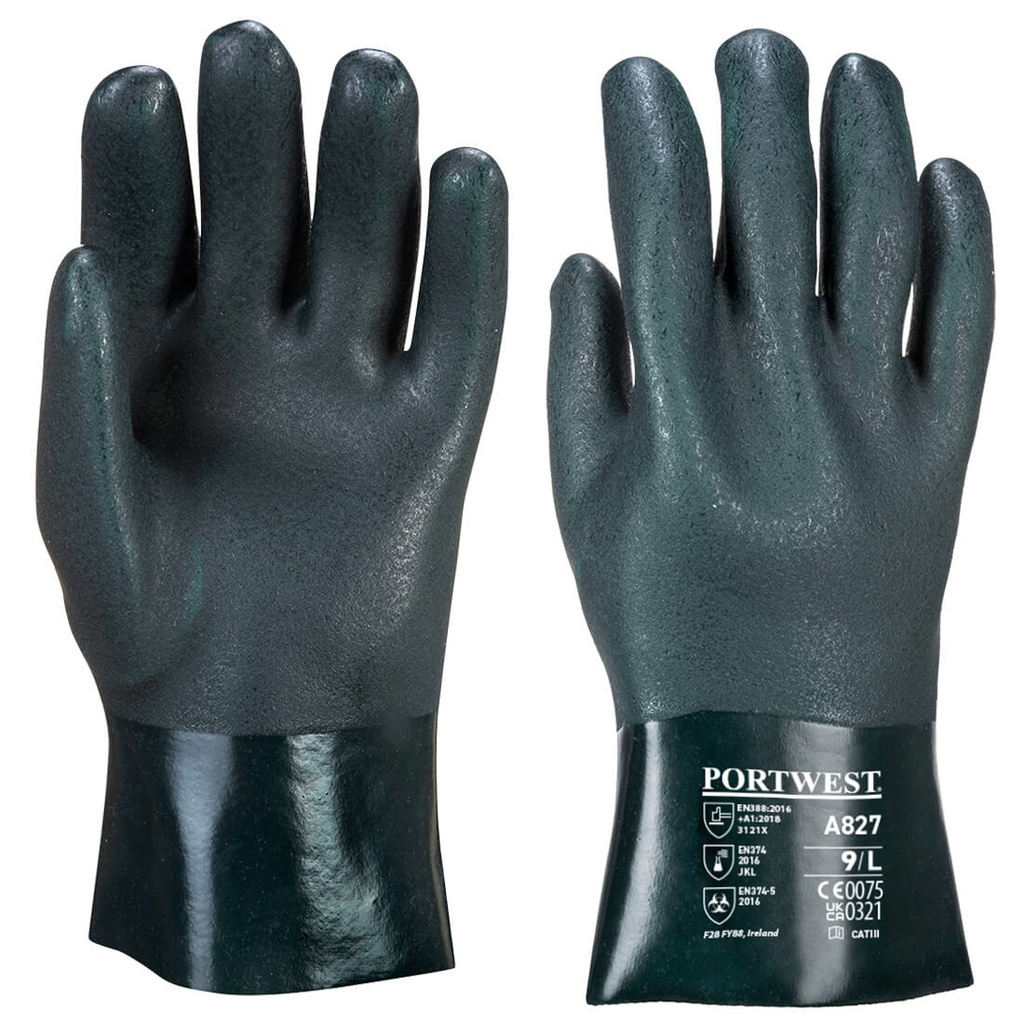
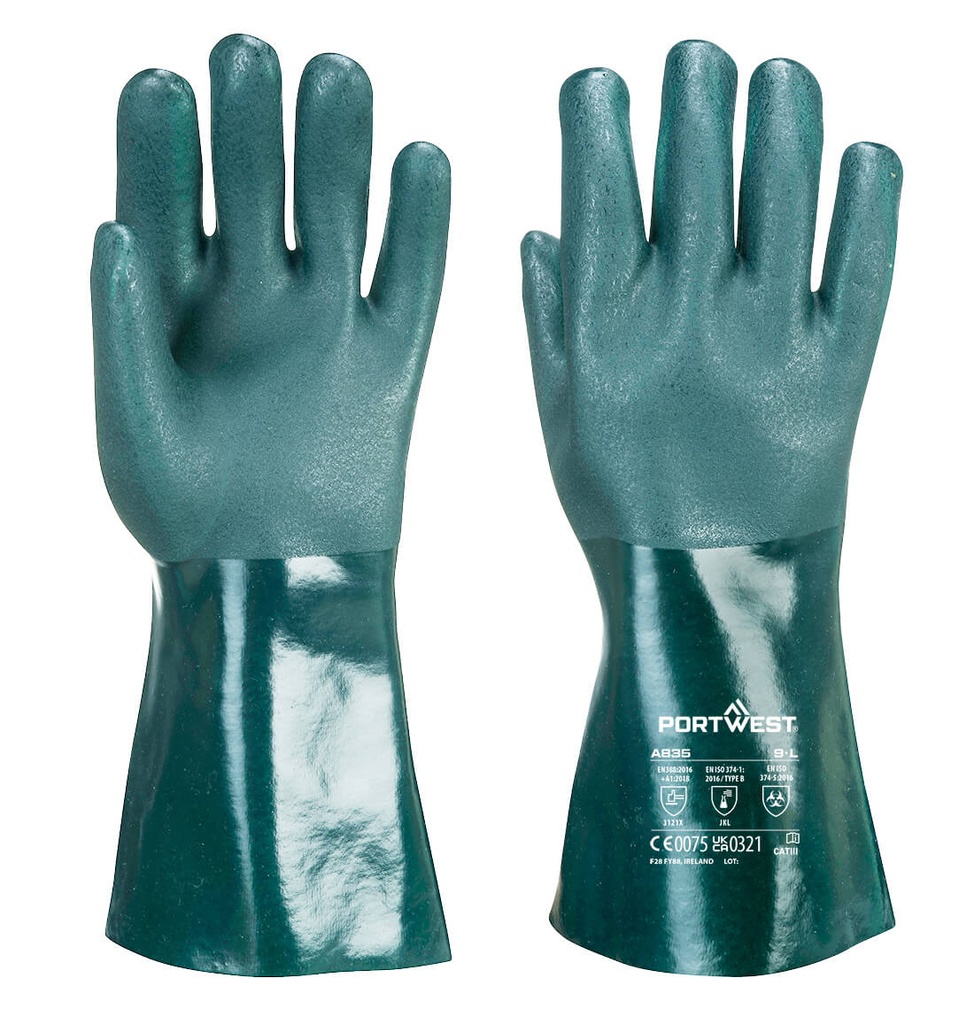
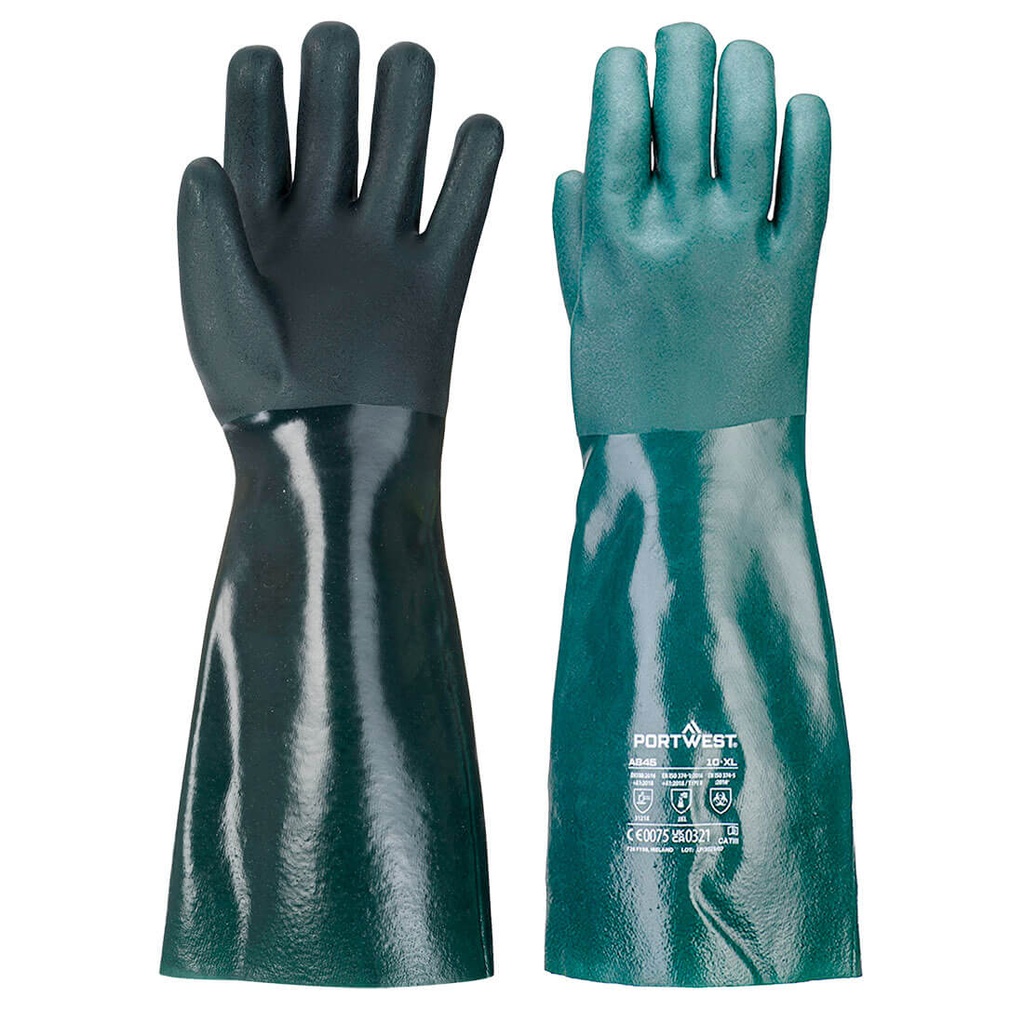
Chem 270 PVC Double Dipped Gauntlet
Chem 350 PVC Double Dipped Gauntlet
Chem 450 PVC Double Dipped Gauntlet
Chem Cut D 350 Nitrile Sandy Gauntlet
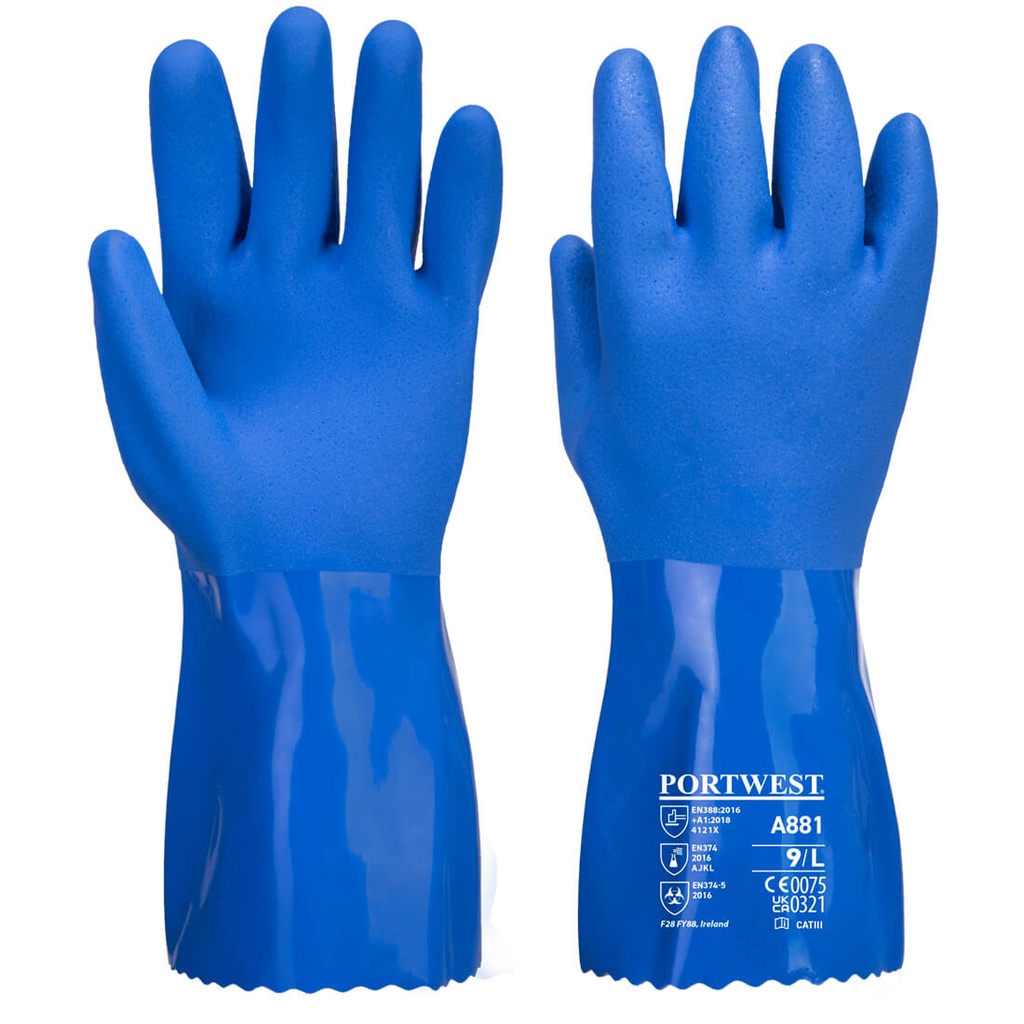
Chem 300 PVC Marine Gauntlet
ESD PVC Chemical Gauntlet
Chem 320 Nitrile Essential Multipack (PK12)
Chem 300 Nitrile Sandy Double Dipped Gauntlet
Chemical gloves: material, standard and length
No glove resists every substance: the choice starts from the safety data sheet of the chemical and the permeation data given in the glove's information leaflet. All models in this category are also certified to EN 388 for mechanical risks.
EN ISO 374-1 Type A and B, EN ISO 374-5
Type A resists at least six substances from the test list for at least 30 minutes each; Type B at least three substances, again for 30 minutes. EN ISO 374-5 certifies protection against bacteria and fungi. Two models also carry ISO 18889, specific to people using plant protection products in agriculture.
Which material
- Nitrile: oils, greases, hydrocarbons and many detergents; good abrasion resistance.
- PVC: dilute acids and alkalis, wet environments and washdown.
- Latex and neoprene: aqueous solutions and industrial cleaning; latex should be avoided in case of allergies.
- Butyl: for specific substances such as ketones and esters, to be checked against permeation data.
Length and special versions
Models from 27 to 35 cm protect the hand and wrist; those from 45 to 60 cm cover the forearm when hands are immersed or there are splashes. There is also a cut level D glove, an antistatic glove and a food-safe glove. For short tasks and hygiene, see disposable and food-safe gloves; if you mainly need cut protection, cut-resistant gloves.
Domande frequenti
What is the difference between Type A and Type B chemical gloves?
Type A has passed the permeation test for at least 30 minutes with at least six substances from the standard's list, Type B with at least three. The substances tested are shown under the pictogram.
Are nitrile, PVC or butyl chemical gloves better?
It depends on the substance: nitrile is suited to oils and hydrocarbons, PVC to dilute acids and alkalis, butyl to certain solvents such as ketones. Always check the model's permeation data against the product being used.
What does ISO 18889 certify on gloves?
It is the standard for gloves intended for people handling and applying plant protection products, such as herbicides and pesticides, in agriculture.
Can I find out when an out-of-stock chemical glove will be available again?
Yes, the product page shows the next arrival date for items being restocked, size by size.